You can't talk about border control in Europe without looking at the sheer fragility of Ceuta. When tens of thousands of people crossed the fence into this tiny Spanish enclave on the North African coast, it wasn't just a local emergency. It was a pressure cooker blowing its lid right in front of Brussels.
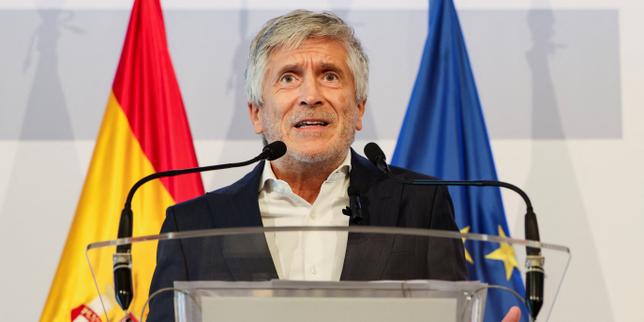
The political fallout hit a fever pitch when Spain's interior minister, Fernando Grande-Marlaska, stepped up to demand an immediate halt to the street violence shaking the territory. Let's look at what's actually happening on the ground, why tensions are boiling over, and what this means for European migration policies. Read more on a connected topic: this related article.
Inside the Pressure Cooker of Ceuta
If you've never been to Ceuta, it's hard to grasp how small it actually is. Packed into just 18.5 square kilometers, this Spanish enclave shares a direct land border with Morocco, making it a permanent flashpoint for migration flows. Following the massive arrivals that caught authorities off guard, thousands of migrants remain stranded in precarious conditions. Many live out in the open, struggling to find clean water and food, while local residents watch their public services buckle under the pressure.
Frustration turned physical when protests organized by frustrated locals erupted into clashes. In one high-profile incident, a military vehicle was pelted with stones, leaving a soldier injured and triggering swift arrests. Right-wing and far-right factions quickly seized on the unrest, demanding immediate mass deportations and harsher border crackdowns. Grande-Marlaska didn't mince words, accusing these political groups of blowing on the embers and stoking racial tensions instead of offering workable solutions. Further analysis by USA.gov explores comparable views on this issue.
"Nul ne peut ni ne doit se faire justice soi-même," the interior minister warned, pointing out that violence solves nothing in a territory already stretched to its absolute limits.
The Clashing Narratives on the Ground
Walk down the streets of Ceuta today, and you'll find a community sharply divided. On one side, residents are exhausted, scared, and angry about the lack of central government support. Public safety concerns are real, and local infrastructure simply wasn't built to house thousands of unexpected arrivals overnight.
Yet, human rights advocates and humanitarian workers remind everyone that these migrants are human beings fleeing desperate conditions. They aren't statistical abstractions or political talking points; they're men, women, and children caught in a diplomatic crossfire. Sorting out who qualifies for asylum versus who faces return isn't a quick administrative checklist—it requires time, security, and institutional resources that Madrid is struggling to deploy fast enough.
Meanwhile, the diplomatic friction between Spain and Morocco adds gasoline to the fire. Police reports leaking details about border laxity have only inflamed public suspicion, leading to massive street demonstrations across Spanish cities where protesters demand immediate answers and stricter security protocols.
What Europe Needs to Do Right Now
You can't solve a systemic crisis with temporary Band-Aids. The European Union has offered emergency financial backing to help upgrade surveillance gear and deploy extra personnel, but money alone won't fix the core issue.
- Fix the legal limbo: Clear and fast administrative processing must replace endless street encampments. Leaving people in legal purgatory guarantees unrest.
- Combat opportunistic radicalization: Political actors looking to score points by inciting vigilantism only make security operations harder for law enforcement.
- Enforce structured cooperation: Border stability relies heavily on transparent, reliable agreements with transit nations that go beyond reactive crisis management.
Ceuta is a mirror reflecting Europe's broader inability to handle migration humanely and securely at the same time. Until policymakers stop treating these border crises as isolated anomalies, the next explosion is just around the corner.