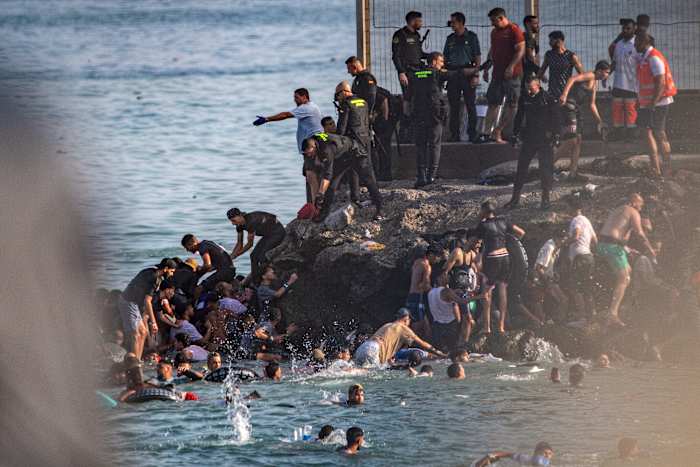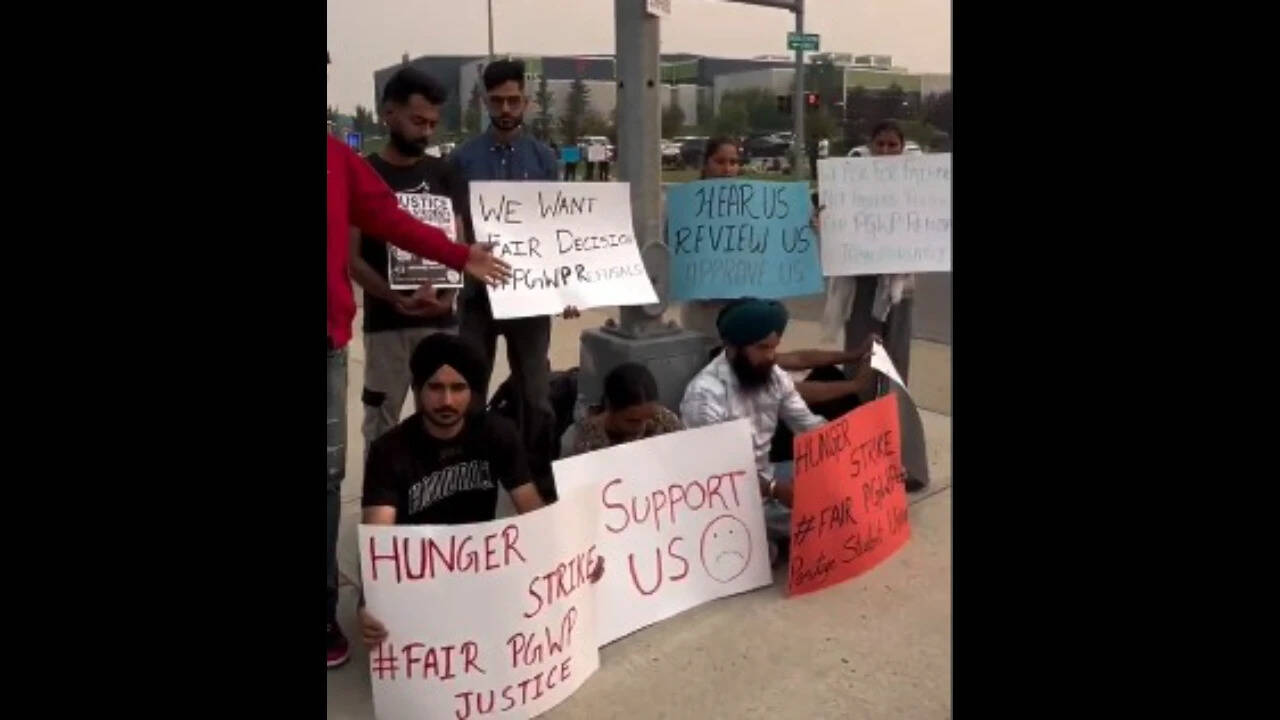
Hundreds of international graduates are standing on a windy street corner in northeast Calgary, Alberta, refusing to leave. Around them, signs demand fair treatment from immigration authorities. Six of those students have stopped eating entirely, launching a 24/7 hunger strike.
They paid tuition. They finished their coursework. They followed the rules. Now, Canada's immigration department says their diplomas don't qualify for a post-graduation work permit.
The crisis centers on students who completed two-year diploma programs through institutions like Portage College and the Canadian Institute of Osteopathic Therapy. After spending upward of $32,000 in tuition and living costs, these graduates applied for their post-graduation work permits (PGWP). Instead of receiving the multi-year open work permits they were promised when they enrolled, Immigration, Refugees and Citizenship Canada (IRCC) served them with outright rejections.
IRCC claims the programs fall under "non-credit" designations that don't meet eligibility rules. The students point to the fact that when they enrolled and paid their fees, these exact courses and partner campuses were explicitly listed as eligible. The rules shifted while they were in the classroom. Now, hundreds face immediate loss of legal status, debt, and deportation.
This isn't an isolated incident. It's the breaking point of a broken international student pipeline.
What Caused the Sudden PGWP Rejections in Canada
To understand how hundreds of graduates ended up stranded, you have to look at how Canada's international student policies collapsed over the last two years.
For over a decade, Canadian post-secondary institutions relied heavily on international student tuition to cover funding gaps. Private colleges struck licensing agreements with public institutions, offering diploma programs that carried the coveted promise of a PGWP. Indian students, who represent the largest demographic of international scholars in Canada, poured billions into local economies under a clear agreement: study here, pay full freight, work legally afterward, and build a path toward permanent residency.
Then the system buckled. Housing shortages, healthcare backlogs, and public pushback forced federal policymakers to act aggressively. IRCC introduced sweeping reforms:
- Federal caps on study permit applications.
- Stricter field-of-study requirements tied to labor market shortages.
- Reclassification of private-public college partnerships and non-credit diploma programs.
- Higher wage thresholds for foreign worker programs.
The problem isn't just policy change. It's retroactivity.
Students enrolled in programs in 2023 or early 2024 under one set of rules. By the time they graduated in 2026, IRCC updated its online portals and eligibility criteria. When graduates submitted their PGWP applications, officers applied current criteria rather than the rules in place at enrollment.
A student who spent two years studying sports therapy or healthcare assistance suddenly found out their diploma was re-tagged as a "non-credit program." In the eyes of IRCC, that distinction invalidates years of hard work and thousands of dollars in fees.
The Human Cost Behind a $32,000 Degree
It's easy to discuss immigration numbers in policy papers. On the ground in Calgary, the reality is far more brutal.
Most Indian students financing an overseas education don't come from wealthy backgrounds. Families sell agricultural land, take out high-interest private loans, or pledge family assets to cover the $30,000 to $40,000 needed for tuition and living expenses. The plan relies entirely on the PGWP. Working legally in Canada after graduation allows students to pay off debt and build a professional career.
Without a work permit, everything falls apart instantly.
- Financial ruin: Students are left with massive loans in India that they cannot repay on local Indian salaries.
- Loss of status: Once a PGWP application is refused, a student's legal temporary status in Canada expires rapidly.
- Employment loss: Employers must terminate staff who lose work authorization, stripping graduates of their income.
- Mental health strain: Facing sudden deportation after spending two to four years integrating into a local community creates extreme psychological trauma.
Protesting students in Calgary emphasize that they aren't asking for special privileges or instant citizenship. They are asking Canada to honor the rules under which they entered the country. "We studied here, we deserve to work here" isn't just a slogan. It's a plea for basic fairness.
How Colleges and IRCC Shift the Blame
When students confront colleges about why their diplomas no longer grant work permits, administrators point to Ottawa. Portage College leadership acknowledged the immigration headaches facing its former students, but stated clearly that eligibility determinations belong entirely to IRCC.
Meanwhile, partner campuses linked to these programs have quietly shut their physical doors or transitioned operations, leaving graduates with nowhere to go.
When students turn to IRCC, the federal government points to the fine print. Immigration regulations state that IRCC retains the right to alter permit criteria at any time, and that holding a study permit never guarantees a subsequent work permit or permanent residency.
This bureaucracy creates a classic trap:
- The College accepts tuition fees, markets the program as a stepping stone to Canadian life, and asserts eligibility at enrollment.
- The Student invests their savings, moves across the world, and completes the coursework in good faith.
- The Government updates internal processing guidelines to curb overall temporary resident numbers.
- The Officer denies the application based on the updated rulebook.
Nobody takes responsibility. The student absorbs 100% of the collateral damage.
Why Protests and Hunger Strikes Are Spreading
The encampment in Calgary isn't the first time international students have organized against policy shifts. Over the past two years, similar demonstrations erupted across Prince Edward Island, Manitoba, and Ontario.
In Prince Edward Island, international workers staged prolonged demonstrations after the provincial government slashed nomination slots for service-sector workers overnight. In Brampton, Ontario, thousands marched when post-graduation extension policies were allowed to expire.
What makes the current Calgary movement different is the level of desperation. A hunger strike is a tool of last resort. When young adults choose to deny themselves food in Canadian weather, it signals that they have run out of legal and financial options.
Community support groups, including local Sikh student associations and migrant rights advocates, have rallied around the protest site. They provide medical checks for the hunger strikers and press federal politicians for direct intervention.
So far, official responses remain cold. Federal officials hold the line that temporary resident numbers must drop from 6.5% to 5% of Canada's total population. Reversing PGWP rejections for thousands of diploma holders directly conflicts with that federal target.
Real Options for Students Facing PGWP Denials
If you or someone you know is caught in this exact situation, protesting is an avenue for advocacy, but you need an immediate legal strategy to protect your status in Canada. Resting your entire future on the hope that IRCC will issue a sweeping policy override is extremely risky.
Here are the concrete legal avenues immigration lawyers and regulated consultants utilize to address PGWP rejections.
1. Request an IRCC Reconsideration Immediately
If your PGWP was refused because the officer claimed your program was non-credit, but you have proof that the program was eligible when you enrolled, your representative can submit an informal Reconsideration Request.
This works best when an administrative mistake occurred. You must provide:
- Archived web pages or official DLI confirmation showing eligibility on your start date.
- Proof of full-time student status throughout your program.
- A clear letter showing that the retroactive application of a policy change created an unfair outcome.
Reconsideration requests do not pause your removal clock, so this must be paired with other status-maintenance steps.
2. Apply for Judicial Review in Federal Court
When IRCC refuses a permit unfairly, you can file an application for leave and judicial review in the Federal Court of Canada. You must hire a licensed Canadian lawyer for this process.
A judge will evaluate whether the immigration officer's decision was "reasonable" and procedurally fair. In past cases where IRCC changed interpretation without warning, courts have ruled that applicants deserved procedural fairness.
Keep in mind: You must file for Judicial Review within 15 days if the decision was made inside Canada, or 60 days if outside Canada.
3. Restore Your Status to Visitor
Do not let your status expire silently. Once denied, your temporary resident status ends. You usually have 90 days from the date of the refusal notice to apply for a Restoration of Status.
Applying to restore as a visitor allows you to stay in Canada legally while you fight the decision or prepare a new application. You cannot work while on visitor status, but staying legal prevents an enforceable removal order.
4. Transition to an Employer-Sponsored Work Permit (LMIA)
If your PGWP route is completely blocked, look for an employer willing to support a Labour Market Impact Assessment (LMIA). Under current 2026 rules, low-wage LMIA streams face heavy caps and higher wage thresholds, but high-wage or specialized streams remain viable.
Target industries experiencing legitimate labor shortages in your province, such as specialized healthcare, trades, or agricultural management.
5. Explore Regional Nominee Pathways (PNP)
Certain provinces have specific streams for graduates who are already working or have job offers, even if their program fell outside federal PGWP scope. Check the specific eligibility rules for Alberta Advantage Immigration Program (AAIP) or other provincial streams to see if an employer-driven stream applies to your current job role.
6. File a Humanitarian and Compassionate (H&C) Application
This is a complex option used primarily as a last resort. An H&C application asks IRCC to grant permanent residency based on the hardship you would face if forced to leave Canada, your degree of establishment in the country, and the financial exploitation experienced through accredited institutions. H&C applications take a long time to process and do not grant automatic work authorization, but they provide a legal record of your situation.
Practical Steps You Should Take Right Now
If you are currently studying in Canada or planning to apply, do not rely on verbal promises from university recruiters, education agents, or marketing brochures. Protect yourself by taking these concrete actions today:
- Audit Your DLI and Program Code: Visit the official IRCC website and search the Designated Learning Institution list. Confirm not just that your school is on the list, but that your specific program of study qualifies for a PGWP.
- Document Everything at Enrollment: Save PDF copies, screenshots, and official acceptance letters that explicitly state your program qualifies for a PGWP on the day you pay your deposit. Store these safely in cloud storage.
- Avoid Unaccredited Private-Public Partnerships: Stick to public universities and public colleges. Policy changes over the last two years have consistently targeted private-partner campuses first.
- Track IRCC Policy Notices Directly: Do not rely on social media or forum rumors for immigration news. Check the official IRCC newsroom notices monthly to spot policy shifts before they impact your application.
- Consult an Unaffiliated Legal Professional: If your school's international student office gives you vague answers about your PGWP eligibility, consult an independent, licensed Canadian immigration lawyer (RCIC or provincial bar member) who has no financial tie to the college.
Canada's international education system has entered an era of strict enforcement and shifting quotas. Navigating it requires double-checking every rule, keeping meticulous paper trails, and taking swift legal action the moment a permit is threatened.