Canadian politicians love telling voters that Ottawa holds all the cards in a trade fight with Washington. You've heard the talking points a hundred times. Canada supplies the American heartland with crude oil, keeps Midwestern lights on with hydroelectric power, and sits on the critical minerals required for high-tech defense and electric vehicles. On paper, it sounds like a ironclad defense. If Washington squeezes Canadian exports, Ottawa can simply turn off the taps or choke off critical mineral pipelines, right?
Not quite.
Honestly, the idea that Canada can easily squeeze the White House into backing down misreads basic trade economics. It also ignores the deep political divisions sitting right inside Canada's own borders.
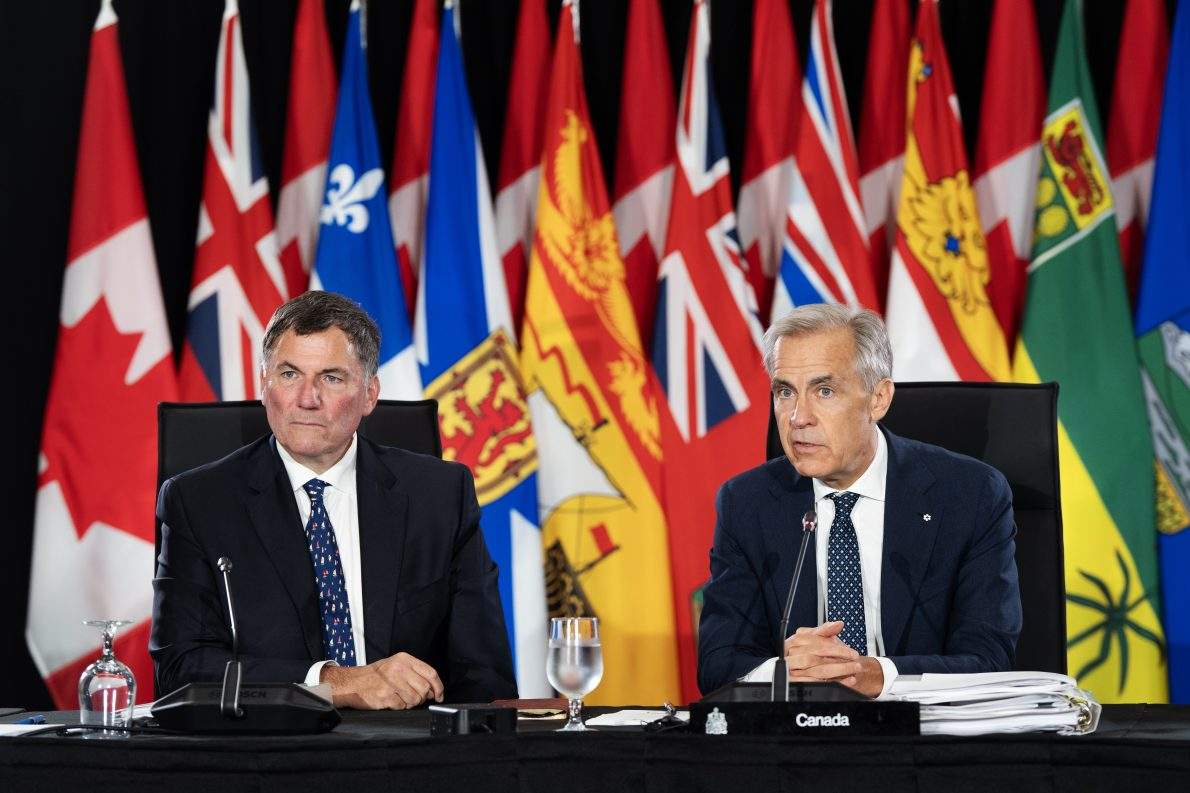
With U.S. President Donald Trump threatening a punishing 50 per cent tariff penalty on Canadian goods under the obscure Section 338 of the U.S. Tariff Act of 1930, the pressure on Prime Minister Mark Carney and provincial premiers has hit a boiling point. But as provincial leaders gather to debate retaliatory measures, the reality of Canada's bargaining power looks a lot more complicated than the political rhetoric suggests.
The Section 338 Threat and the Built-In Exceptions
To understand where Canada stands, you have to look closely at what Washington actually targeted in its latest wave of executive orders.
The White House slapped 50 per cent tariff threats on a wide array of Canadian goods, citing provincial boycotts on American alcohol, dairy quotas, and Ottawa's retaliatory duties on U.S.-made vehicles. The list covers everything from lumber and paper to consumer goods, textiles, and agricultural products.
Look at what Washington left out.
The executive orders explicitly exempted crude oil, natural gas, potash, fish, and critical minerals.
That omission is not an accident. American trade officials know exactly what their economy needs to function daily. They deliberately carved out the very raw materials that Canadian politicians like to hold up as potential bargaining chips. Washington effectively signaled that it wants cheap access to Canadian raw resources while punishing Canadian manufactured and consumer goods.
That puts Ottawa in an awkward corner. If the U.S. isn't tariffing Canadian energy or nickel, Canada would have to take the proactive step of cutting off exports or applying export surcharges itself.
Doing that is a completely different game than matching tariffs line by line.
Why Turning Off the Taps Is Harder Than It Sounds
Proponents of hardball trade tactics argue that Canada should restrict energy exports to force Washington back to the negotiating table. Ontario Premier Doug Ford previously floated electricity surcharges, and some commentators point to Canada's dominant position in potash and critical minerals as weaponizable assets.
The theory sounds simple. The practice is a nightmare.
First, consider the physical infrastructure. Canadian energy pipelines and transmission lines are built to flow north-to-south. Canada cannot simply redirect hundreds of thousands of barrels of heavy crude or gigawatts of electricity to Europe or Asia overnight. The ports don't exist in sufficient capacity, and the pipeline capacity isn't there. If Canada restricts energy exports to the U.S., Canadian producers suffer immediately from shut-in production and cratering domestic prices.
Second, American buyers would certainly feel the pain, but they aren't completely helpless forever. While refineries in the U.S. Midwest are calibrated specifically for Canadian heavy crude, a prolonged energy showdown would accelerate U.S. efforts to retool facilities or source alternatives, even at higher costs.
Third, and most importantly, retaliatory export bans on raw materials hit American industrial consumers, who then lobby Washington. But in a high-stakes trade war, the White House has shown a willingness to absorb short-term economic friction to force long-term structural concessions.
The Provincial Unity Problem
Even if weaponizing resources made theoretical sense, Canada lacks the internal consensus to pull it off.
A unified front is mandatory if a nation wants to use raw materials as economic muscle. Canada doesn't have one.
The rift between Canada's provinces on this issue is wide and deep.
- Ontario has pushed for an aggressive "dollar for dollar" response, taking a hardline stance on U.S. imports and signaling a willingness to use energy exports as a pressure point.
- Alberta has flatly rejected using oil and gas as a retaliatory tool. Premier Danielle Smith knows that any move to restrict Western Canadian energy exports inflicts direct, catastrophic damage on Alberta's provincial treasury and energy sector jobs.
- British Columbia Premier David Eby suggested that U.S. access to Canadian critical minerals should be contingent on Washington dropping tariffs, trying to tie trade peace directly to mineral access deals.
- Quebec Premier Christine Fréchette remains focused on defending supply management for dairy and protecting aerospace, making clear that concessions in agriculture are a non-starter.
When provincial premiers don't agree on the strategy, Washington notices. U.S. trade negotiators are adept at playing regional interests against each other. If Alberta refuses to cut oil exports while Ontario wants to levy electricity surcharges, the "Team Canada" strategy breaks apart in full public view.
Disunity destroys bargaining power faster than any U.S. executive order.
The Critical Minerals Mirage
Much has been made of Canada's critical mineral reserves. Canada holds vast deposits of nickel, lithium, cobalt, copper, graphite, and rare earth elements that are essential for batteries, electronics, and military hardware.
Washington knows this. In fact, U.S. defense and intelligence agencies have spent years working under joint action plans to secure North American mineral supply chains. The U.S. Department of Defense has even direct-funded Canadian mining projects to reduce reliance on Chinese processing.
Because of this reliance, some analysts argue that Canada holds significant clout in critical minerals.
Here is the cold truth: holding minerals in the ground is not the same as controlling a market.
Extracting and refining critical minerals requires massive capital, long regulatory permitting timelines, and decades of investment. Canada currently exports roughly two-thirds of its total mineral production to the United States, amounting to tens of billions of dollars annually. If Canada attempts to restrict these exports or impose export taxes, Canadian mining firms lose their primary buyer at a time when they urgently need capital to expand.
Moreover, American companies hold extensive equity investments across the Canadian mining sector. About 323 Canadian mining firms have pulled in over $45 billion in U.S. investment capital. Trying to cut off critical mineral flows to the U.S. damages the very companies Canada relies on to build out its mining sector.
It's a classic double-edged sword. Threatening to withhold resources you rely on selling is like threatening to shoot yourself in the foot to ruin the shooter's shoes.
The Trade Asymmetry Reality Check
Strip away the political speeches and you're left with stark trade arithmetic.
Canada's economy relies heavily on trade with the U.S., which absorbs around 75 per cent of all Canadian exports. By contrast, exports to Canada account for roughly 15 per cent of total U.S. foreign trade.
While Canada is the top export destination for dozens of U.S. states, the macro economic pain of a total trade breakdown hits Canada far harder and faster than it hits the U.S.
- U.S. GDP Impact: A trade halt creates localized cost spikes, supply chain headaches for automakers, and consumer inflation on specific goods.
- Canadian GDP Impact: A sustained trade restriction risks triggering an immediate recession, currency devaluation, and widespread layoffs in manufacturing and forestry.
Prime Minister Mark Carney's cautious approach reflects this reality. Carney has repeatedly stated that "everything is on the table," but he has deliberately avoided rushing into pre-emptive retaliatory measures. His strategy relies on keeping channels open, preparing contingency support for domestic industries, and attempting to settle disputes within the broader framework of the Canada-United States-Mexico Agreement review window.
Carney knows that firing early retaliatory shots without a clear path to victory usually leads to escalating counter-tariffs that Canada cannot win in a pure endurance contest.
What Real Bargaining Power Looks Like
Does this mean Canada is completely helpless? No.
It just means Canada's true bargaining chips aren't quick-fix export bans or dramatic resource blockades. Real economic strength in trade negotiations comes from quieter, more practical structural advantages.
- Integrated Supply Chain Value: The North American auto, aerospace, and industrial supply chains are deeply intertwined. Car parts cross the border up to eight times before a final vehicle rolls off the assembly line. Pointing out the immediate job losses that tariffs inflict on factory workers in Michigan, Ohio, and Pennsylvania gives Ottawa natural allies inside the U.S. business community.
- Targeted Retaliation on Discretionary Goods: Rather than taxing essential inputs, targeted duties on finished American goods—like agriculture, specialized manufacturing, and consumer items—create concentrated political pressure on specific U.S. congressional districts without crippling Canadian industrial input costs.
- Regulatory and Market Speed: Canada can accelerate permitting for critical mineral projects, domestic energy processing, and refining to make North American supply chains genuinely resilient. Being an indispensable, reliable partner gives Canada far more long-term diplomatic leverage than acting as an unpredictable supplier.
- Internal Market Integration: Canada can immediately reduce internal trade barriers between its own provinces. It's an embarrassment that it is often easier for a Canadian province to trade with a U.S. state than with a neighboring province. Fixing domestic trade friction adds billions to Canadian GDP without needing Washington's permission.
Practical Next Steps for Businesses and Leaders
If you own a business, manage supply chains, or invest in North American equities, waiting for trade peace is a losing strategy. Here is how to navigate the current trade climate effectively.
- Audit Your Tariff Exposure Immediately: Map your entire supply chain down to raw materials. Identify which components cross the U.S. border under CUSMA and assess whether your products fall under specific Section 338 or Section 232 classifications.
- Diversify Sourcing and Processing: If you rely on critical minerals or imported industrial components, begin building secondary supplier relationships outside single-country bottlenecks. Explore domestic processing partnerships where possible.
- Build Foreign Exchange Buffers: Trade volatility drives sharp fluctuations in the Canadian dollar against the U.S. greenback. Utilize hedging strategies to protect operating margins against currency swings caused by tariff headlines.
- Lobby Through Cross-Border Industry Coalitions: Individual company complaints rarely change federal trade policy. Join industry associations that work directly with U.S. state governors, mayors, and regional business chambers who understand the economic cost of cross-border trade friction.
- Focus on Domestic Trade Opportunities: Look for provincial suppliers to replace imported American goods where retaliatory tariffs make foreign inputs cost-prohibitive.
The trade war dynamics between Ottawa and Washington aren't going away overnight. Canada's path forward isn't built on dramatic threats to cut off natural resources, but on smart, quiet economic positioning that makes the North American economy impossible to run without Canadian inputs.