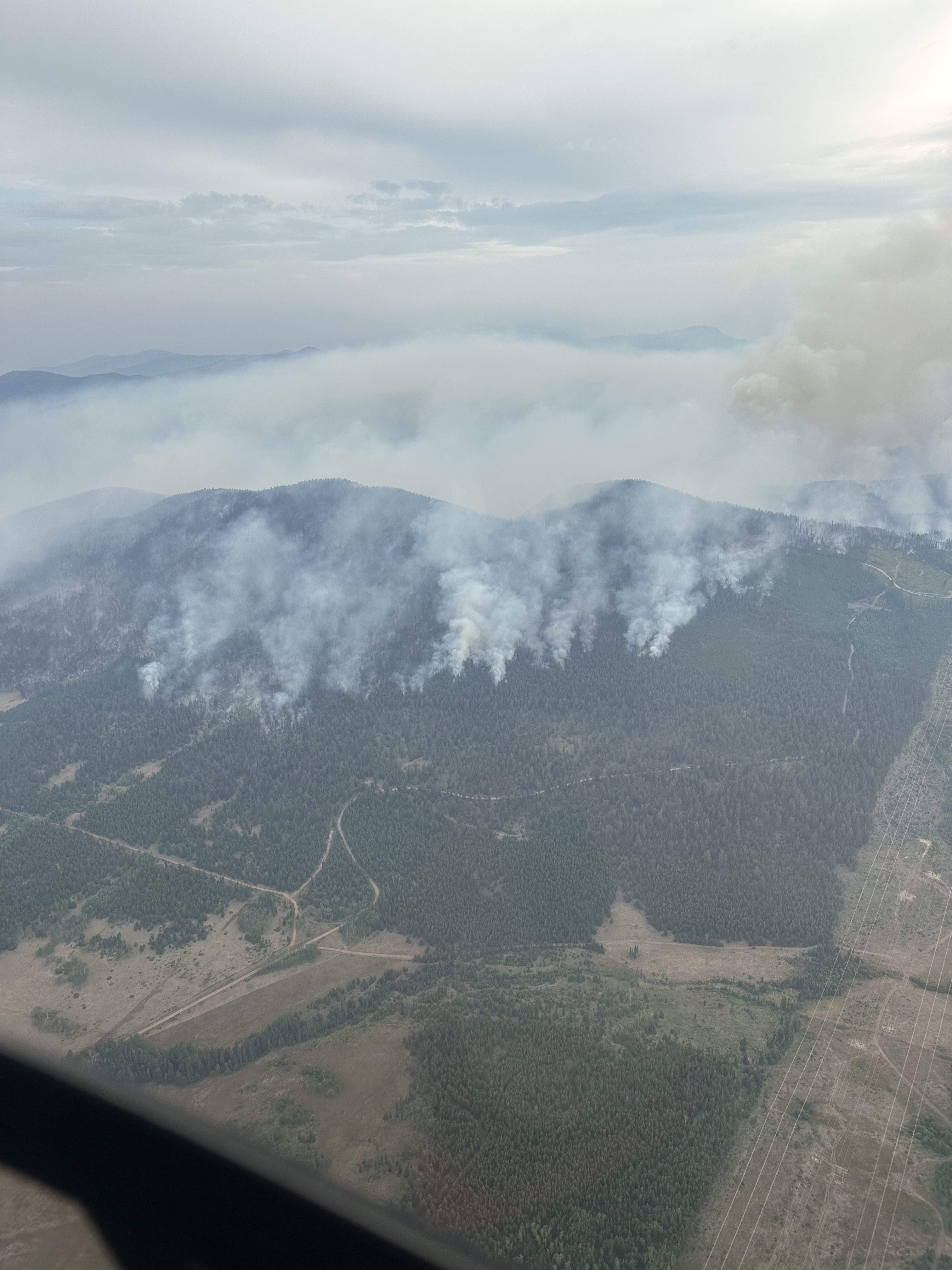
When an out-of-control wildfire crests the ridge behind a rural town, official instructions are unambiguous. Emergency crews issue an evacuation order, blare sirens, and tell everyone to pack up and leave immediately. Yet every summer across British Columbia, dozens of property owners choose to stay put. They hook up industrial sprinklers, drag out heavy hoses, and prepare to battle the flames on their own land.
It's easy for urban spectators to judge this behavior as stubborn reckless defiance. Sitting in a air-conditioned living room in Vancouver, watching smoke plumes on television, refusing to flee looks like pure madness. But when you talk to the people who stay behind in places like Boston Bar, Takysie Lake, or the Fraser Canyon, a much more complicated reality emerges.
Understanding why B.C. wildfire evacuation orders get ignored requires looking past the knee-jerk criticism and examining what rural life actually demands.
The Gap Between Government Mandates and Rural Reality
When an evacuation order hits a small community, the formal system operates on a broad, risk-averse model. Emergency managers must prioritize saving human life over saving timber, barns, or houses. That calculation makes total sense from an institutional standpoint. Officials cannot risk losing firefighters or civilians to protect a timber shed or a tractor.
To a farmer or rural homeowner, that calculation looks entirely different. A property in the Fraser Valley or the Cariboo isn't just an asset you insure and rebuild. It's often decades of manual labor, livestock, specialized machinery, and ancestral roots. Insurance payouts, even when they come through without endless friction, don't replace century-old barns, herds of cattle, or irreplaceable family history.
People stay because they believe no one else will prioritize their home when the fire hits. In many cases, they're right. Fire crews face triaging decisions where they must abandon individual rural properties to protect critical infrastructure or entire town centers. If a homeowner leaves, they know their house enters that survival lottery unattended.
Local Knowledge Meets Institutional Strategy
A persistent myth surrounding stay-behind residents is that they're all inexperienced amateurs acting on impulse. Some certainly are, and those individuals put themselves and first responders in extreme danger. Many who choose to stay are loggers, heavy equipment operators, ranchers, and former forestry technicians.
These residents have worked the land for decades. They know how wind moves through specific draws in the local topography. They own bulldozers, water trucks, and diesel-powered pumps. When officials treat rural locals as helpless bystanders, it creates deep resentment.
During major blazes, including the Brunswick Complex fires near Boston Bar where hundreds of properties faced orders, locals frequently report feeling sidelined by distant command posts. When authorities refuse to coordinate with experienced local contractors, those locals simply bypass the official system altogether.
McGill University lecturer John Gradek, who studies Canada's disaster response, has noted that traditional wildfire strategies from twenty or thirty years ago no longer match current fire behavior. Fire seasons are longer, hotter, and far more explosive. Yet institutional communication with rural communities hasn't evolved at the same pace.
What First Responders Wish Stay-Behind Residents Understood
While the motivation to defend one's home is understandable, emergency officials aren't issuing warnings to be heavy-handed. Their warnings stem from tragic experience.
When a wildfire turns, it doesn't move at a predictable crawl. Shifts in wind direction can drop a crown fire onto a road in seconds. Thick smoke reduces visibility to zero instantly, turning a familiar driveway into a maze.
Samatha Piper, speaking for the Fraser Valley Regional District Emergency Operations Centre, highlighted the core danger during recent evacuations. Civilians who stay behind often don't realize exit routes are cut off until it's already too late.
When a stay-behind resident gets trapped, the entire mission changes. Wildfire crews must halt active containment efforts to execute a high-risk rescue operation. That diverts personnel, helicopters, and water tenders away from stopping the fire line, which endangers everyone downwind.
There's also the problem of air quality and physical exhaustion. Inhaling heavy wood smoke for forty-eight hours straight destroys decision-making capacity. A person who felt sharp and prepared on day one becomes disoriented and physically compromised by day three, right when the fire front actually arrives.
How FireSmart Preparation Changes the Equation
Defending a property doesn't begin when smoke appears on the horizon. The debate over staying or leaving obscures a vital truth. The vast majority of structural survivability happens weeks, months, or years before a fire ever ignites.
Properties that survive wildfires rarely do so because someone stood on the roof with a garden hose while flames licked the gutters. They survive because the owner systematically cleared fuel sources long before fire season started.
The Three Assessment Zones Around Your Home
Immediate Zone (0 to 1.5 meters)
This is the critical non-combustible moat. No firewood stacks, no cedar mulch, no dried leaves in gutters, and no wooden decking attached directly to siding. If an ember falls here, it should find nothing to burn.Intermediate Zone (1.5 to 10 meters)
Move flammable vegetation away from structures. Replace resinous conifers like cedar and pine with broadleaf deciduous trees. Keep grass mowed under ten centimeters. Ensure propane tanks sit at least ten meters away from any structure.Extended Zone (10 to 30 meters)
Thin out dense tree clusters so crowns don't touch. Prune lower tree branches up to two meters off the ground to prevent ground fires from climbing into the canopy. Clear accumulated deadfall and brush.
When Staying Behind Works and When It Fails
If you look at successful cases of private property defense across B.C., a clear pattern emerges. Success requires professional-grade equipment, abundant water supplies independent of the municipal grid, clear escape routes, and zero illusions about safety.
Requirements for Effective Defense
- Independent Power and Water: Municipal power grids shut off during fires. Standard water mains lose pressure when everyone turns on taps. Defense requires high-pressure gas pumps drawing from large ponds, swimming pools, or dedicated bladders.
- Automated Rooftop Sprinklers: High-volume impulse sprinklers set up on roofs create a high-humidity microclimate around the structure. These need to run continuously without human intervention.
- Personal Protective Gear: Fire-resistant Nomex clothing, full-face respirators with P100 particulate filters, leather gloves, and heavy boots. Synthetic clothing like polyester melts onto skin under radiant heat.
- Hard Trigger Points: A pre-determined, non-negotiable threshold for retreating. If the fire crosses a specific geographic line, visibility drops below twenty meters, or water supply drops below twenty percent, the defense ends and evacuation happens immediately.
Rethinking the Relationship Between Rural Residents and Authorities
The conflict between B.C. residents and wildfire authorities doesn't need to be an annual battle of wills. Other jurisdictions offer alternative models that balance public safety with private initiative.
In parts of Australia, the official policy for decades followed a "stay and defend or leave early" philosophy. While extreme conditions have forced updates to that model, it recognized that well-prepared adults with proper equipment could play a role in structural protection.
B.C. needs a structured framework that bridges this gap. Rather than an all-or-nothing approach that turns cooperative citizens into lawbreakers overnight, authorities could implement formal local volunteer registries. Rural residents with heavy equipment and wildland training could receive official safety briefings, radios, and designated roles within the broader incident command system.
Until that kind of integrated system exists, the friction will persist. Every summer, fires will start, orders will be broadcast, and determined locals will pick up hoses and stay behind.
Practical Steps to Prepare Your Property Today
Waiting for an evacuation order to figure out your plan guarantees panic and poor choices. If you live in a fire-prone region, take these direct steps immediately.
- Conduct a FireSmart Audit: Walk your perimeter today. Clear all dead pine needles from your roof, gutters, and deck joints. Move firewood stacks at least ten meters from any building.
- Install Roof Sprinklers Now: Buy dedicated agricultural sprinklers and mounting brackets before supply stores run out during peak season. Test your pump setup using an independent fuel supply.
- Establish a Secondary Escape Route: Identify at least two distinct driving routes out of your valley or neighborhood. Keep your vehicle tank at least half full throughout July and August.
- Document Everything: Take video footage of every room in your house, your barn contents, and your outbuildings. Store the video file in cloud storage. Insurance claims move infinitely faster with clear visual proof.
- Set an Unbreakable Line: Decide right now what conditions will force you to leave. Write those conditions down, share them with your family, and stick to them when the smoke rolls in.