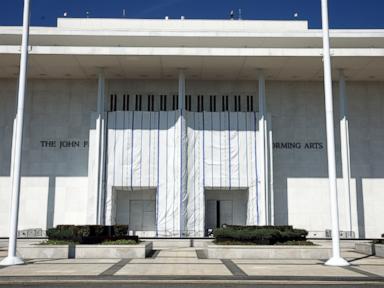
The fight over branding the nation's premier performing arts hub has hit another legal speed bump. Following a tense court showdown, the Department of Justice promised a federal judge that any plans to place President Donald Trump's name on the exterior or plaza of the John F. Kennedy Center for the Performing Arts will stay on hold until at least October 8.
If you've been trying to keep track of the endless tug-of-war between the administration and federal courts over public monuments and federal buildings, this latest delay is just a single battle in a much larger war. U.S. District Judge Christopher Cooper made it clear during a two-hour courtroom session that he wanted the board to stand down voluntarily while he mulls over the legality of the move. Cooper even signaled he was ready to hand down a formal freeze if management refused to hit pause.
What’s Actually Happening at the Kennedy Center
Let's cut through the noise. The core dispute centers around whether the board of trustees overstepped its bounds by pushing to honor Trump on the building's facade and plaza. Back in May, Judge Cooper blocked a sweeping administrative plan to shutter the facility for two years and ordered previous Trump signage removed, ruling that the 1964 statute establishing the memorial explicitly protects its name and purpose.
Yet, the administration didn't quietly pack up its legal briefs. The board subsequently passed a new resolution honoring Trump, sparking fiery accusations from legal representation for Ohio Democratic Representative Joyce Beatty—who sits on the board as an ex-officio member—that the board was thumbing its nose at the judiciary.
During the late August hearing, attorney Nathaniel Zelinsky didn't hold back, calling the board's renewed efforts an "outright defiance" of prior rulings and pointing out that drilling into the historic marble once had already caused real, physical damage to the structure.
The Legal and Financial Arguments
Government attorneys have taken a different stance. Justice Department lawyer Brantley Mayers pushed back against the framing that a formal renaming was underway. Instead, the administration insisted that recognizing Trump on the plaza and exterior is tied directly to addressing the institution's ongoing financial hurdles and structural wear-and-tear.
In a rather dramatic filing ahead of the hearing, government lawyers even floated the notion that blocking the comprehensive renovation efforts could lead to severe degradation, prompting dramatic headlines about potential demolition. Judge Cooper quickly brushed that argument aside, dismissing those opening pages of the government's brief as a non-sequitur that had zero bearing on the actual statute in question.
Cooper is now tasked with untangling a very specific legal knot: Does putting a president's name on an exterior plaza violate a 1983 statute that bars new memorials from public areas of the center? The line between honoring a modern executive and violating a decades-old congressional mandate protecting a living memorial to JFK remains razor-thin.
What Comes Next
For now, the machinery is paused. The October 8 deadline gives the federal court a brief window to dissect the statutory limits of the board's power.
You don't need a law degree to see that this dispute is about much more than architectural signage or exterior brass letters. It touches on executive authority, federal property management, and how public monuments are preserved in Washington. Keep an eye on Judge Cooper's docket as autumn approaches, because the upcoming ruling will likely set a hard precedent for how far any administration can go when reshaping federally backed cultural institutions.
Kennedy Center briefly delays plan to add Trump's name to building
This video report from local news covers the courtroom details and the specific timeline surrounding the October delay agreed upon by the Justice Department.