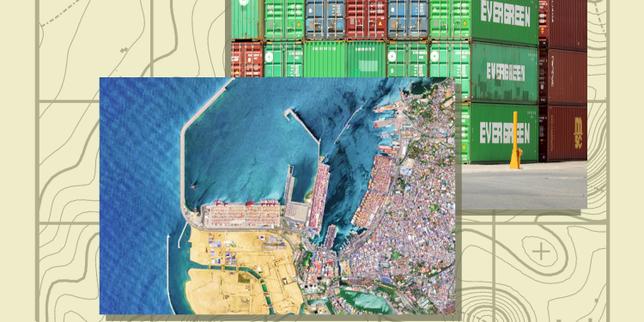
Right off the tip of India's southern coast, a quiet tug-of-war is playing out along one of the busiest maritime highways on Earth. Nearly 70% of South Asia’s transshipment cargo passes through the Port of Colombo. That single fact makes this strip of Sri Lankan coastline a geographic prize nobody can afford to ignore.
If you look closely at who is building, funding, and managing the terminals in Colombo right now, you won't just see local port authorities. You'll see state-backed Chinese megacorporations, India's largest infrastructure conglomerates, and even hundreds of millions of dollars in backing from the U.S. government.
The stakes go far beyond shipping containers. Colombo has turned into ground zero for regional influence. China got a massive head start a decade ago, but India and its partners are pushing back with serious cash and strategic acquisitions.
How China Built First-Mover Advantage in Colombo
To understand why everyone is fighting over this port, you have to look back to 2011. Sri Lanka needed deep-water infrastructure capable of handling the world's largest container ships. China Merchants Port Holdings stepped in with a massive investment to build the Colombo International Container Terminal (CICT).
They didn't just build a terminal. They took an 85% stake in a 35-year build-operate-transfer deal.
By the time CICT opened for business, it was the only terminal in the port capable of docking ultra-large container vessels. The move paid off quickly. CICT consistently handled over 40% of the port's total throughput, giving Beijing a firm grip on South Asia's main shipping nexus.
Down the coast, China also secured a 99-year lease on the Hambantota International Port after Sri Lanka struggled to service its debt. That move sent shockwaves through New Delhi and Washington. Indian security planners realized that if China controlled both Hambantota and the primary terminal in Colombo, Beijing could effectively control the sea lines connecting the Middle East to East Asia.
Colombo Port Terminal Ownership Breakdown

1. Colombo International Container Terminal (CICT)
   - Primary Stakeholder: China Merchants Port Holdings (85%)
   - Status: Fully Operational

2. West Container Terminal (WCT)
   - Primary Stakeholder: Adani Ports (51%), John Keells (34%), SLPA (15%)
   - Financing: $553 million from US Development Finance Corp (DFC)
   - Status: Under Construction / Phased Operations

3. Colombo Dockyard PLC
   - Primary Stakeholder: Mazagon Dock Shipbuilders Ltd - India (51%)
   - Status: Operational Ship Repair & Construction Hub
India Counterattacks with Port and Shipyard Control
New Delhi realized early on that watching from the sidelines wasn't an option. More than 70% of Colombo's transshipment volume is tied directly to Indian trade. Having a Chinese state company sit between Indian exporters and global markets created an obvious vulnerability.
India's strategy came in two major waves.
1. The Adani Group's West Container Terminal
After an earlier attempt to jointly build the East Container Terminal fell apart due to political pushback in Sri Lanka, India shifted focus to the West Container Terminal (WCT).
Adani Ports & SEZ secured a 51% controlling stake in a $700 million project to construct WCT. Alongside Sri Lanka’s John Keells Holdings and the Sri Lanka Ports Authority, Adani set out to build a 1,400-meter quay with a 20-meter depth. Once fully operational, this single terminal will process around 3.5 million TEUs annually, placing India directly alongside China's CICT inside the same harbor basin.
2. Mazagon Dock Takes Control of Colombo Dockyard
While container shipping gets most of the headlines, India pulled off a quieter, highly strategic move inside the port. State-owned Mazagon Dock Shipbuilders Limited (MDL)—a defense ministry shipyard in India—acquired a 51% controlling stake in Colombo Dockyard PLC for $26.8 million.
This gives India direct operational control over Sri Lanka's largest shipbuilding and repair facility right inside Colombo Port. It means naval vessels, commercial tankers, and cargo ships servicing Indian Ocean routes can now be maintained under Indian management in Colombo.
The American Money Behind the Docklands
Washington isn't sitting this one out either. In late 2023, the U.S. International Development Finance Corporation (DFC) pledged $553 million in debt financing for Adani's West Container Terminal project.
That is one of the largest infrastructure commitments the U.S. government has made in Asia. It signals a clear strategy. Rather than building competing infrastructure from scratch, the United States is choosing to finance Indian-led projects to counter Chinese state-backed infrastructure across the Indo-Pacific.
For global shipping lines, this competition is actually a net positive. When major powers compete for berths in a single port, capital flows in, operational efficiency improves, and capacity expands.
Why Sri Lanka Is Playing Both Sides
From Sri Lanka’s point of view, hosting rival global powers is a delicate balancing act born of economic survival.
Following its 2022 economic crisis, Colombo needed foreign capital, infrastructure investment, and hard currency. Pitting foreign interests against one another keeps the money flowing.
- To Beijing: Sri Lanka offers trade partnerships, Ningbo-Colombo port dialogues, and proposed industrial zones.
- To New Delhi: Sri Lanka offers strategic assets, shipyards, energy pipeline links to Tamil Nadu, and power grid interconnections.
- To Washington: Sri Lanka opens the door for development finance and maritime security cooperation.
The risk is obvious. If political tensions flare up between India and China, Sri Lanka could find itself squeezed in the middle. But for now, the competition is turning Colombo into South Asia’s undisputed mega-hub.
Key Implications for Global Supply Chains
If you operate in logistics, shipping, or regional manufacturing, this dynamic changes how you should view South Asian freight routes.
- Better Draft Depth Means Bigger Vessels: With both CICT and WCT operating 20-meter deep berths, Colombo can easily host 24,000+ TEU mega-ships without light-loading.
- Lower Feeder Costs to India: Adani's involvement creates tighter integration between Colombo and Indian mainland ports like Vizhinjam and Mundra, cutting turn-around times for transshipment cargo.
- Diversified Risk: Shippers don't have to rely solely on Chinese-managed terminals when moving cargo through Sri Lanka, giving international carriers more operational choices.
Practical Next Steps for Logistics Managers
If your supply chain relies on Indian Ocean shipping routes, here is how you should adjust your strategy:
- Audit Your Transshipment Routes: Evaluate whether your carriers route through Colombo's CICT or the newer WCT berths to understand potential regulatory or geopolitical exposure.
- Monitor Deep-Water Port Alternatives: Keep an eye on India's new deep-water transshipment port at Vizhinjam in Kerala, which will compete directly with Colombo for mother-vessel calls.
- Track Terminal Capacity Rates: As WCT completes its final phases, expect transshipment tariffs at Colombo to become more competitive as terminals vie for volume.


